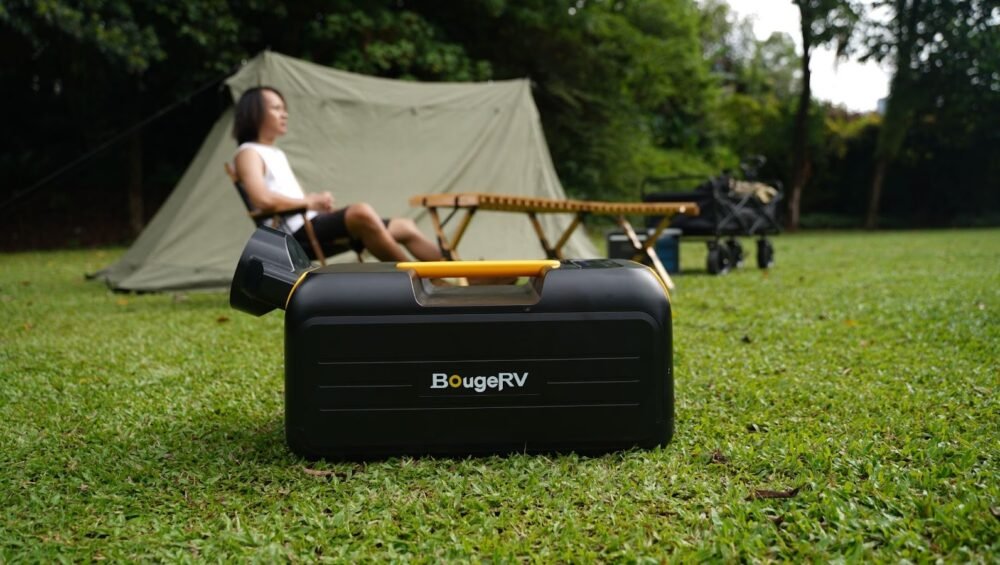
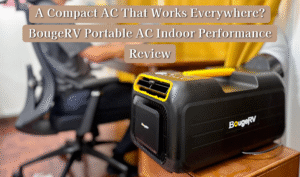
After spending the past few weeks testing the BougeRV Portable Air Conditioner indoors, outdoors, and everywhere in between, I’ve come to appreciate what this machine is and what it’s not. It’s easy to jump into conclusions about portable air conditioners “being gimmicky” or “too weak to make a real difference”, but the BougeRV proved that with the right conditions, thoughtful setup and a bit of planning, you can create real comfort in places where cooling usually isn’t an option.
This final review is meant to wrap up everything I’ve experienced so far. Not just the specs or claims, but how it feels to live with the unit day-to-day, and whether its strengths outweigh the inevitable trade-offs that come with any portable cooling system.
A Portable AC That Actually Cools — Indoors and Outdoors
Across all three rounds of testing, one thing stayed consistent: the BougeRV cools better than I expected for its size.
The cooling performance isn’t “ice-cold blast” territory like a 1.5HP wall air conditioning unit, but it delivers a steady, comfortable cool wind that genuinely improves your environment. Whether it was my ‘heat-trapping’ work corner in the afternoon heat (in a room without air conditioning), a storage room with limited ventilation, a small bedroom overnight, or a tent under the blazing sun, the BougeRV managed to pull the temperature down reliably.
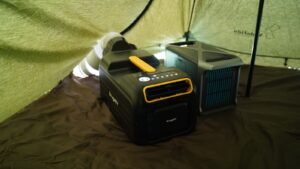
In smaller, enclosed spaces, the temperature drop was more obvious. Bedrooms and tents reached that comfortable mid-20s °C range within 15–30 minutes. Outdoors, where air heats up faster, the impact was still noticeable enough to turn a tent into a livable space. It won’t magically turn the tent from a ‘sauna’ into an ‘icebox’, but it definitely made the environment more breathable and comfortable.
Consistency and Practicality in Real-World Use

One thing I came to appreciate is how consistent the BougeRV feels. The airflow doesn’t sputter, the cooling doesn’t fluctuate, and the noise doesn’t suddenly spike. Once it’s up and running, it stays steady even in humid weather or inside a cramped tent.
Modes like Sleep and Fan made overnight use surprisingly pleasant, with the unit humming at around 50 dB—quiet enough that it faded into the background. In my indoor tests, that consistent hum even acted like white noise. And although dehumidification isn’t its headline feature, it noticeably reduced humidity in my storage room and indoor areas without producing that stale smell some dehumidifiers tend to give off.
The app control also grew on me over time. It seemed useless at first when we were testing indoors where the controls were within reach, but during the camping test, not having to unzip the tent or reach outside to adjust modes turned out to be genuinely convenient.
Lastly, it also functions as a dehumidifier, perfect for spaces that have limited airflow and high humidity. The BougeRV extracts the excess humidity in the room and converts them into water – just prepare a pail to collect the water that can be reused to wash floors or flush the toilet.
Portability: Not Featherlight, But Impressively Flexible

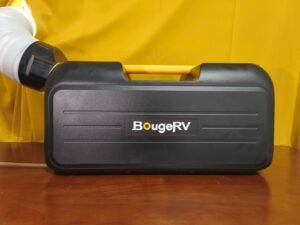
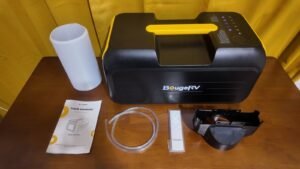
Calling it “portable” is accurate, the thick sturdy handle makes moving it around convenient. At around 15kg, you’re not tossing it around casually, but you can move it between rooms or pack it for a camping trip with a bit of planning. Its rectangular form factor is compact enough to fit beside a bed, in a corner of a tent, or in a tight workspace without getting in the way.
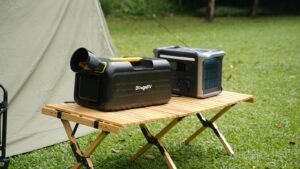
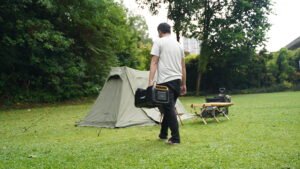
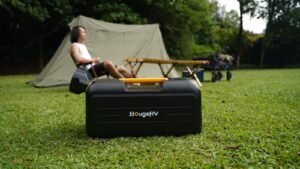
Outdoors, especially when paired with a portable power station, it starts to feel like a completely different category of gear. It turns camping from “tolerable” to “comfortable,” and that alone will appeal to anyone who camps often, has kids, or simply prefers not to sweat through the night.
Power and Runtime: Know What You’re Working With

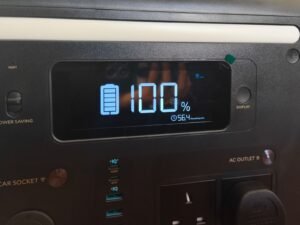
After testing the BougeRV with a power station, it became clear that cooling output comes with trade-offs. Fan and sleep modes can run for dozens of hours on a 1229 Wh station, making them ideal for overnight camping. High cooling mode, however, drains power quickly—expect roughly 2–2.5 hours. For longer cooling periods, consider a bigger power station, generator or plugging it into an EV car that has bigger battery capacity.
To achieve a cooling effect, any cooling device will draw similar wattage as they do the heavy lifting of cooling. If you are using it outdoors, a bit of planning will help go a long way to enhance the experience.
Where The BougeRV Shines Most
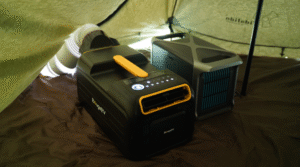
After using it in every setting I could realistically think of, there are a few environments where the BougeRV feels almost purpose-built:
- Small bedrooms in rental units or older apartments
If you can’t install air conditioning or need targeted cooling without rewiring your room, this solves a real problem. - Home offices or study corners that trap heat / where air does not circulate
Localized cooling makes long work sessions far more bearable. - Store rooms, garages or small workshops
Humidity reduction made these unexpected spaces surprisingly comfortable. - Tents, gazebos, cabins or van setups
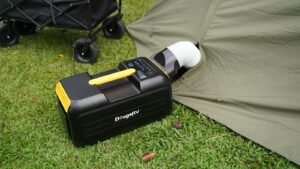
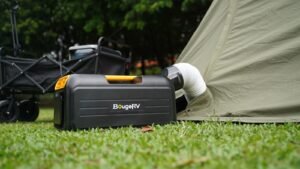
With the right venting, it adds actual comfort—not just airflow—to outdoor living.
It occupies a unique space between a fan, a dehumidifier and a full air-conditioning system and it borrows the best parts of each.
Where It Fell Short (But Not Unexpectedly)
No review is complete without acknowledging what I wished was better.
For starters, the power cord could be longer. A few extra feet would make placement more flexible. The requirement of a flat-blade screwdriver to access the filter is also something I hope they redesign someday. And while the weight is manageable, wheels or a telescopic handle would make moving it around even easier especially for female users.
Finally, like all portable ACs, you need to plan for the hot-air exhaust during placement. It’s not a flaw specific to the BougeRV—just something to understand before buying into the portable AC category.
Final Take: A Practical, Capable, and Surprisingly Adaptable Cooling Companion
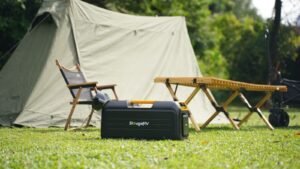
After testing the BougeRV Portable Air Conditioner across indoor spaces and a full outdoor camping trip, I can confidently say it lives up to its touted features. Its strength isn’t extreme temperature drops, but consistent, reliable cooling in places where a traditional AC simply isn’t an option. Indoors, it keeps small spaces comfortable; outdoors, it adds a level of comfort I didn’t expect from a portable unit.
It is not meant to replace a built-in aircon unit, but for the price, easy setup, and versatility, it’s one of the most functional portable cooling devices that people can get to cool their spaces reliably.
A solid 4.5 stars from me.
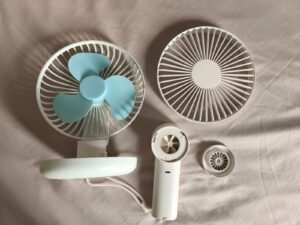
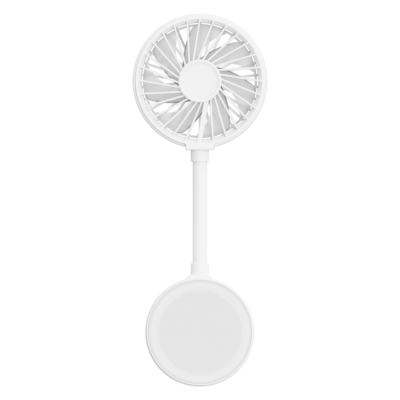
If this sounds like the solution you’ve been looking for, you can now pre-order the BougeRV Portable Air Conditioner at RM1,299, and early buyers will receive a Foldable Fan Cooling Pad as a bonus — a handy add-on especially if you’re planning to use it outdoors.
Still deciding? Revisit the full review series to see how it performed in every scenario: first impressions, indoor testing, and the full outdoor camping experience.