CategoriesReviews

Living With the BougeRV Portable Air Conditioner — A Complete Take After Weeks of Testing

After spending the past few weeks testing the BougeRV Portable Air Conditioner indoors, outdoors, and everywhere in between, I’ve come to appreciate what this machine is and what it’s not. It’s easy to jump into conclusions about portable air conditioners “being gimmicky” or “too weak to make a real difference”, but the BougeRV proved that with the right conditions, thoughtful setup and a bit of planning, you can create real comfort in places where cooling usually isn’t an option.

This final review is meant to wrap up everything I’ve experienced so far. Not just the specs or claims, but how it feels to live with the unit day-to-day, and whether its strengths outweigh the inevitable trade-offs that come with any portable cooling system.

A Portable AC That Actually Cools — Indoors and Outdoors
Across all three rounds of testing, one thing stayed consistent: the BougeRV cools better than I expected for its size.

The cooling performance isn’t “ice-cold blast” territory like a 1.5HP wall air conditioning unit, but it delivers a steady, comfortable cool wind that genuinely improves your environment. Whether it was my ‘heat-trapping’ work corner in the afternoon heat (in a room without air conditioning), a storage room with limited ventilation, a small bedroom overnight, or a tent under the blazing sun, the BougeRV managed to pull the temperature down reliably.

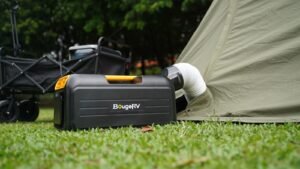
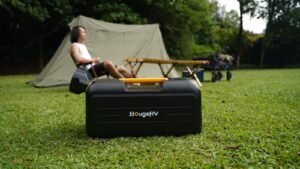
In smaller, enclosed spaces, the temperature drop was more obvious. Bedrooms and tents reached that comfortable mid-20s °C range within 15–30 minutes. Outdoors, where air heats up faster, the impact was still noticeable enough to turn a tent into a livable space. It won’t magically turn the tent from a ‘sauna’ into an ‘icebox’, but it definitely made the environment more breathable and comfortable.

Consistency and Practicality in Real-World Use

One thing I came to appreciate is how consistent the BougeRV feels. The airflow doesn’t sputter, the cooling doesn’t fluctuate, and the noise doesn’t suddenly spike. Once it’s up and running, it stays steady even in humid weather or inside a cramped tent.

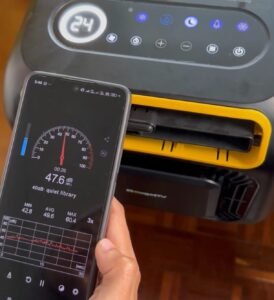
Modes like Sleep and Fan made overnight use surprisingly pleasant, with the unit humming at around 50 dB—quiet enough that it faded into the background. In my indoor tests, that consistent hum even acted like white noise. And although dehumidification isn’t its headline feature, it noticeably reduced humidity in my storage room and indoor areas without producing that stale smell some dehumidifiers tend to give off.

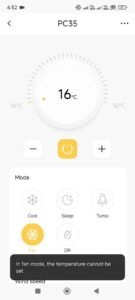
The app control also grew on me over time. It seemed useless at first when we were testing indoors where the controls were within reach, but during the camping test, not having to unzip the tent or reach outside to adjust modes turned out to be genuinely convenient.

Lastly, it also functions as a dehumidifier, perfect for spaces that have limited airflow and high humidity. The BougeRV extracts the excess humidity in the room and converts them into water – just prepare a pail to collect the water that can be reused to wash floors or flush the toilet.

Portability: Not Featherlight, But Impressively Flexible

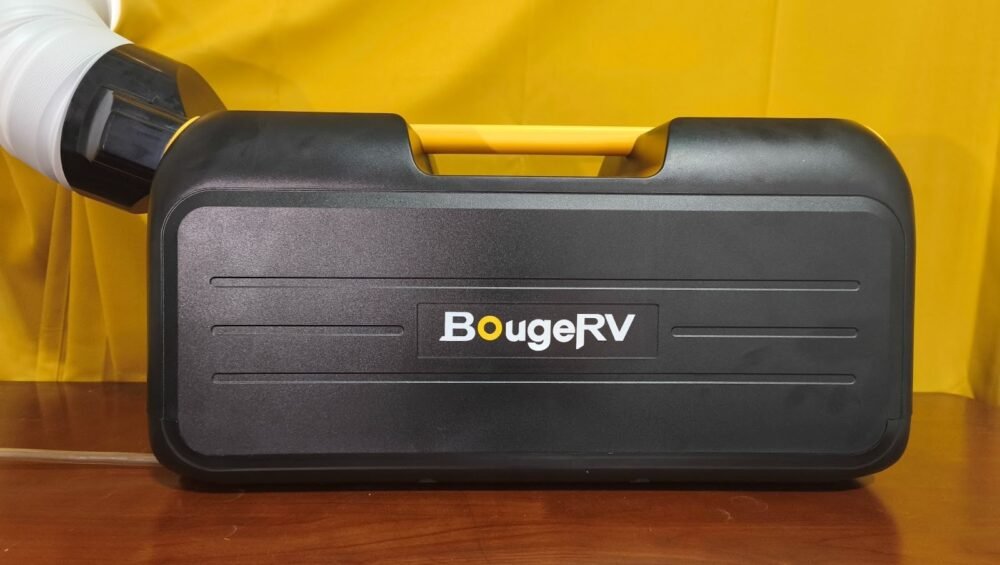
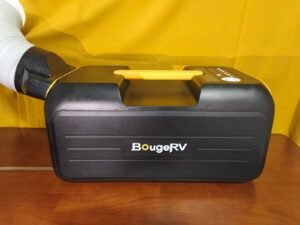
Calling it “portable” is accurate, the thick sturdy handle makes moving it around convenient. At around 15kg, you’re not tossing it around casually, but you can move it between rooms or pack it for a camping trip with a bit of planning. Its rectangular form factor is compact enough to fit beside a bed, in a corner of a tent, or in a tight workspace without getting in the way.

Outdoors, especially when paired with a portable power station, it starts to feel like a completely different category of gear. It turns camping from “tolerable” to “comfortable,” and that alone will appeal to anyone who camps often, has kids, or simply prefers not to sweat through the night.

Power and Runtime: Know What You’re Working With

After testing the BougeRV with a power station, it became clear that cooling output comes with trade-offs. Fan and sleep modes can run for dozens of hours on a 1229 Wh station, making them ideal for overnight camping. High cooling mode, however, drains power quickly—expect roughly 2–2.5 hours. For longer cooling periods, consider a bigger power station, generator or plugging it into an EV car that has bigger battery capacity.

To achieve a cooling effect, any cooling device will draw similar wattage as they do the heavy lifting of cooling. If you are using it outdoors, a bit of planning will help go a long way to enhance the experience.

Where The BougeRV Shines Most
After using it in every setting I could realistically think of, there are a few environments where the BougeRV feels almost purpose-built:

  • Small bedrooms in rental units or older apartments
    If you can’t install air conditioning or need targeted cooling without rewiring your room, this solves a real problem.
  • Home offices or study corners that trap heat / where air does not circulate
    Localized cooling makes long work sessions far more bearable.
  • Store rooms, garages or small workshops
    Humidity reduction made these unexpected spaces surprisingly comfortable.
  • Tents, gazebos, cabins or van setups
    With the right venting, it adds actual comfort—not just airflow—to outdoor living.

It occupies a unique space between a fan, a dehumidifier and a full air-conditioning system and it borrows the best parts of each.

Where It Fell Short (But Not Unexpectedly)

No review is complete without acknowledging what I wished was better.

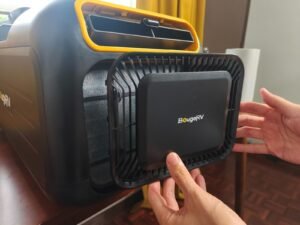
For starters, the power cord could be longer. A few extra feet would make placement more flexible. The requirement of a flat-blade screwdriver to access the filter is also something I hope they redesign someday. And while the weight is manageable, wheels or a telescopic handle would make moving it around even easier especially for female users.

Finally, like all portable ACs, you need to plan for the hot-air exhaust during placement. It’s not a flaw specific to the BougeRV—just something to understand before buying into the portable AC category.

Final Take: A Practical, Capable, and Surprisingly Adaptable Cooling Companion
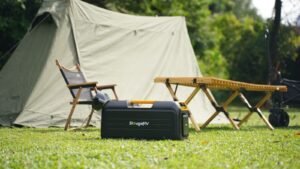
After testing the BougeRV Portable Air Conditioner across indoor spaces and a full outdoor camping trip, I can confidently say it lives up to its touted features. Its strength isn’t extreme temperature drops, but consistent, reliable cooling in places where a traditional AC simply isn’t an option. Indoors, it keeps small spaces comfortable; outdoors, it adds a level of comfort I didn’t expect from a portable unit.

It is not meant to replace a built-in aircon unit, but for the price, easy setup, and versatility, it’s one of the most functional portable cooling devices that people can get to cool their spaces reliably. 

A solid 4.5 stars  from me.

If this sounds like the solution you’ve been looking for, you can now pre-order the BougeRV Portable Air Conditioner at RM1,299, and early buyers will receive a Foldable Fan Cooling Pad as a bonus — a handy add-on especially if you’re planning to use it outdoors.

Still deciding? Revisit the full review series to see how it performed in every scenario: first impressions, indoor testing, and the full outdoor camping experience.

CategoriesReviews

A Compact AC That Works Everywhere? My Real-World Test of the BougeRV Portable Air Conditioner

After unboxing the BougeRV Portable Air Conditioner, I was going in with an open mind – the online reviews looked good, marketing videos seemed legit and initial tests were true to what it claimed. It looked neat and compact, sturdy and sounded like a workhorse — but as product reviewers, we have to check against the spec sheet and marketing claims. I wanted to see if this little unit could actually handle Malaysia’s kind of heat and humidity, not just survive in standard lab conditions.

So I decided to test it indoors around the house where people may not have an air conditioning installed. I tested in three different spots: a study/work corner, a storage room/garage, and a small (usually spare) bedroom. Here’s how it went down:

Study/Work Space Test — Keeping Me Cool During the Afternoon Heat

My work corner that is beside the window gets warm after lunch during sunny days. I placed the BougeRV about half-a-metre away and switched it to Cooling Mode at 20 degrees celsius with medium fan speed. Within minutes, I could actually feel the difference — not that icy kind of cold, but a softer, more natural breeze that made it easier to focus as my immediate area’s temperature cooled.

I also felt a bit of a dehumidifying effect, which was evident from the humidifier indicator which dropped from 72% to 65%. Noise wise, it was pretty quiet — the hum of the BougeRV was somewhere around 55–60 dB as per the sound testing app — noticeable if you listen for it, but never distracting with sudden jolts of sounds.

The app control, though not essential to the cooling experience, was a nice touch too. I could tweak the temperature or timer right from my desk — no need to get up mid-flow. For small home offices or study spaces, I’d say this unit is more than enough to stay comfortable through long work sessions. 

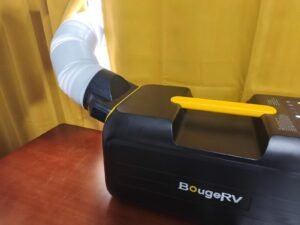
One thing to note is the provision of a hot air outlet near a window to expel the hot air. For my test, I used the flexible hose and pointed the open end to the bottom corner of the window. For long term usage, this will likely be a fixed position for the pipe, and this opening can be DIY-ed with a 3D-printer or an off the shelf accessory. 

Store Room/ Garage Test — Beating Humidity and That Musty Smell 

This is a less thought of use case – my storage room. We don’t think of it much, but when we are inside of it long enough for packing or searching for things, it becomes a situation where comfort makes a big difference. Store rooms are usually tiny-ish, packed with boxes, and always feels like a sauna. For this test, I switched to Max Mode at 18°C and directed the hot air outside using the flexible hose.

By the 3rd-minute mark with the power churn, I could already tell the air was lighter and cooler — not that heavy, sticky kind anymore. The packing or ‘treasure hunt’ experience was immediately elevated to an enjoyable one without the sweat. 

One of the biggest surprises was that the air did not smell musty after a while. The dual-hose setup seemed to help cycle out stale air while bringing in fresher air. I definitely did not expect that level of freshness from such a small machine.

By extension, this can be useful in bigger areas like a garage where we do not spend time there frequently but when we do spend time, it could be more than 20-30mins at a time. 

Spare (small) Bedroom Test — Overnight Cooling for Better Sleep

Finally, I brought it into a small bedroom for an overnight run. I set it to Sleep Mode at 19 °C, pointed the BougeRV to the bed and placed the outlet vent towards the window, and went to bed.

The BougeRV being a small compact air conditioning unit, managed to push cool air out consistently without the loud noise. Its cooling technology mimics an aircon cooling unit and condenser unit efficiently without the hassle of running the water to an outlet. Not surprisingly, the sound was quiet in this mode at around 50 decibels which is akin to a library. The air felt soft — not a harsh, cold blast that makes you reach for a blanket halfway through the night. It was comfortable on the cooling front and the noise test.

By morning, the room still felt cool and comfortable, and the air wasn’t dry, the humidity measure recorded 65%. 

If you’re renting or living in an apartment without built-in air-con, this is a really practical solution for your warm nights. No messy installation, no water issues, no drilling, just plug in, find an outlet for the hot air and sleep cool throughout the night.

Final Thoughts — Small Machine, Big Impact

After using it around the house for a few days, I’d say the BougeRV Portable Air Conditioner is more than just a “portable AC.” It’s like an all-in-one cooling device — cooling, dehumidifying, and even freshening the air in a local area without disturbing the humans in the room.

It’s light enough (17kg) and balanced well with a handle to move around when needed, but once you set it up, it works quietly and consistently. I love that it doesn’t need any permanent installation except for the positioning of the hot air outlet, and the energy use seems quite decent for what it does (400W). I do wish it had a longer power plug cord, so that it can be powered to a power source more neatly without extension cables.  

Extending the concept of localized cooling, it can cool areas in bigger rooms where the traditional wall mounted air conditioning units may not be able to reach. But with a few of the BougeRV around, it is able to help cool it down. 

Next, I’m planning to take it outdoors for a camping test — that’ll really show how “portable” it is and how long it can last with a portable power station. But indoors? It’s already proven itself. Compact, quiet, and reliable — this little guy fits perfectly into real homes who need portable cooling. 

Verdict: ⭐️⭐️⭐️⭐️☆ (4.5/5) — Great for small areas in humid weather. Would highly recommend it if you need portable cooling without the hassle of installing a full air-con system and drainage system.

Curious how our journey started? Check out our first impression review to see our early thoughts before we tested it indoors. Pre-order now at RM1299 and experience how this compact air conditioner can fit perfectly into your home.

CategoriesReviews

BougeRV Portable Air Conditioner Makes Every Spot a Chill Zone

If you’ve ever wished you could bring your air conditioner camping with you, the BougeRV Portable Air Conditioner might be the next best thing. It’s a compact powerhouse built to keep you cool whether you’re in your bedroom, working in your room, or spending a hot night outdoors in a tent.

I tested it out for a while, and although it’s not the lightest gadget around, it’s easily one of the most practical cooling devices I’ve tried so far. This piece is just a first impression—a quick look at how it performs straight out of the box. 

What’s in the Box


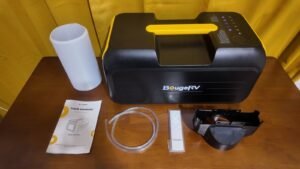
Unboxing the BougeRV Portable Air Conditioner is as simple as it gets. Inside, you’ll find:

  • a 1.7-metre exhaust duct,
  • an adapter,
  • a drain pipe,
  • a remote control
  • a small instruction booklet, and
  • the air conditioner unit.

Everything is neatly packed and easy to set up, even if you’ve never owned a portable air conditioner before. Once everything’s connected, just press the On/Off button on the touch panel, and you’re good to go, without any complicated assembly or confusing settings needed.

Easy Controls and Instant Cooling

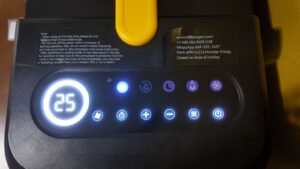
One thing I immediately liked about the BougeRV is how effortless it is to operate. You can choose between five modes—Cooling, Dehumidification, Sleep, Strong, and Fan—all accessible from the touch panel or the remote control. The interface is straightforward and responsive, making it easy to switch settings even for first-time users.

When I set it to Cooling mode, the temperature dropped fast. The unit can go as low as 16°C, and in my test, it reached the target temperature in about 30 seconds. The airflow feels strong and refreshing even from a few metres away, and with three fan speeds plus a 20° adjustable vent, it’s easy to direct the cool air exactly where you want it.

For its size, it cools a bedroom quickly and evenly, which is impressive for such a compact air conditioner.

Dehumidification Mode: Great for Humid Days

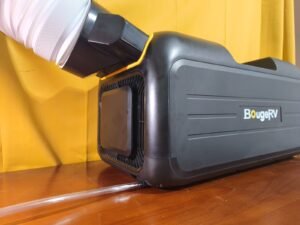
The weather’s humidity can be brutal, so this mode is a real bonus. You just attach the drain pipe, place a small container under the outlet, and the BougeRV starts pulling moisture from the air. During my test, the humidity dropped from 66% to 62% in just two minutes. It may sound like a small change, but you can feel the air getting fresher almost immediately.

What’s impressive is how consistent the performance feels. The airflow remains steady, and the unit doesn’t produce that heavy, damp smell some dehumidifiers do after running for a while. This makes it especially useful on rainy or humid nights when your room starts to feel sticky.

Noise Levels: Not Silent, But Definitely Bearable

Let’s talk about sound, because no one wants a portable jet engine in their room. The BougeRV isn’t silent, but it’s far from noisy. On Cooling mode, it hums at around 60dB, roughly the same as a normal conversation. Dehumidification and Sleep modes are noticeably quieter, sitting around 48–50dB, which is about what you’d expect in a calm office or library.

When using Sleep mode at night, the sound fades into the background after a few minutes. If you’re someone who usually sleeps with a fan on, you’ll likely find the consistent hum soothing rather than distracting. In fact, it adds a bit of white noise that can help mask other ambient sounds.

Perfect for Indoors or the Outdoors

During my test, I set up the BougeRV in a bedroom and simply placed the exhaust hose out of the window and it worked just like a regular air conditioner. The setup was straightforward, and it cooled the space efficiently without much hassle.

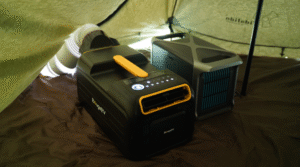
What really makes it stand out, though, is its versatility. The BougeRV can also be used outdoors, making it great for camping trips, road adventures, or van life setups. You can position the unit outside a tent and direct the cold air hose inside, then power it through a portable power station or an EV car. It’s not something most air conditioners can do, and that flexibility makes it genuinely practical for anyone who wants cooling comfort anywhere they go.

Smart Control: Modern Convenience

The BougeRV also comes with a mobile app that connects via Bluetooth. Through the app, you can view the current temperature, change modes, adjust fan speed, and set a timer of up to 24 hours. The app’s range goes up to 10 metres, which is handy if you’re across the room.

If you prefer a more classic approach, the included remote works perfectly too. I found it handy when I didn’t want to reach for my phone or get up from bed. Both control options are responsive and easy to use, even for beginners.

A Few Things to Keep in Mind

There are a few small trade-offs. The BougeRV weighs about 15.5kg, so it’s not the lightest unit to move around. It also needs to be plugged into a power source. There’s no built-in battery, so you’ll want to plan where to place it in advance.

Cleaning the filter requires a bit of effort too, since you’ll need a flat-blade screwdriver to pop open the front panel. And if you’re using the Dehumidification mode, don’t forget to prepare a container to collect the water. These are minor details, but they’re worth knowing before daily use.

Pre-Order Offer and Final Thoughts

Pre-order the BougeRV Portable Air Conditioner today for $399/RM1,299 and get a free foldable fan with cooling pad while supplies last. This is just a first impression after a day of testing, but the BougeRV already stands out for its strong cooling performance, simple operation, and practical design.

If you’re planning ahead for the next heatwave or want a more comfortable space without permanent installation, this portable unit is definitely one to keep on your radar. Don’t wait—secure yours now and be ready to stay cool when the temperature rises! 

CategoriesAir Circulator Fan

Fan-First Cooling: Why You Should Use a Fan Up to 27°C Before Switching to Aircon

In tropical countries like Singapore and Malaysia, staying cool is a daily challenge. With temperatures consistently hovering between 23°C and 33°C and humidity levels often exceeding 80%, air conditioning has become the default solution for comfort. But as electricity bills soar and climate concerns grow, it’s time to rethink how we cool our spaces (and our bodies).

A growing number of experts now advocate for a fan-first strategy, using fans as the primary cooling method until indoor temperatures reach around 27°C. This isn’t just a cost-cutting tip; it’s a science-backed approach that balances comfort, energy efficiency, and environmental responsibility. 

Here’s why this strategy works, and why it might just be the cooling mindset shift we need in the tropics:

Why Fans Work (Even in High Humidity)

Let’s start with the basics: fans don’t lower room temperature. Instead, they help your body cool itself more efficiently through two main processes; evaporation and convection.

In humid climates like ours, sweat doesn’t evaporate easily because the air is already saturated with moisture. This is why you might feel sticky and uncomfortable even when you’re not overheating. What a fan does is create airflow that sweeps away the humid layer near your skin, allowing sweat to evaporate more effectively. That’s how it helps you cool down, even if the air around you stays warm.

Fans also promote convection cooling by disrupting the layer of warm air that surrounds the body. As the fan circulates air, it replaces this insulating layer with cooler ambient air, enhancing the sensation of comfort. In fact, studies show that fan use can make a space feel up to 4°C cooler.

Older guidelines once cautioned against fan use in extreme heat, but more recent findings show that fans remain safe and effective up to 38°C–39°C, especially when humidity is high. In Southeast Asia, where extreme dry heat is rare, fans are a practical and reliable tool for daily comfort.

Energy Efficiency: A Clear Win for Fans

When it comes to electricity consumption, the numbers are hard to ignore. A central air conditioner can consume up to 3,500 watts per hour, while a typical ceiling or pedestal fan uses only 15 to 100 watts. That’s just 1% to 5% of the energy, translating to substantial savings over time.

Fan-First Cooling

In Malaysia, where electricity is charged in tiers, fans help households stay within the lower, more affordable brackets. In Singapore, with regulated tariffs, fans similarly help keep monthly bills manageable for energy-conscious households.

And beyond the wallet, there’s the bigger picture: fans drastically reduce greenhouse gas emissions compared to air conditioners. They also relieve pressure on power grids, which is especially crucial during peak heat periods.

Comfort Without Compromise

You might be wondering; can fans really keep you comfortable in this heat?

Fan-First Cooling

The answer is yes—up to a point. Research shows that most people can tolerate indoor temperatures up to 27°C when using fans. This makes it entirely feasible to delay turning on the air conditioner, or set it to a higher temperature (say, 26°C to 28°C) while using a fan for air movement. This hybrid method keeps your space comfortable without burning through electricity.

Studies in Malaysia have shown this approach works well in homes, offices, and even religious spaces. In one study of Malaysian mosques, comfort levels were found to be optimal between 26°C and 27.8°C using natural ventilation and fans alone.

Similarly, in Singapore, pairing ceiling fans with higher air-conditioning set points in commercial buildings resulted in up to 30% energy savings, without sacrificing thermal comfort.

The Case for a Hybrid Cooling Strategy

There will be days when fans aren’t enough, especially during heatwaves or in poorly ventilated rooms. That’s where a hybrid strategy shines: use fans as the first line of defense, and bring in air conditioning only when absolutely necessary.

Fans help distribute cool air more evenly, eliminating hot spots and allowing your AC to run at a lower intensity. You get the same level of comfort with less energy use. It’s a smarter way to cool.

Some tips for effective hybrid cooling:

  • Set your ceiling fan to spin counter-clockwise during hot days where it pushes cooler air down.
  • Use portable fans to direct airflow where you need it most.
  • On cooler evenings, use window or exhaust fans to pull in fresh outdoor air.

Most importantly, listen to your body. Children, the elderly, and those with health conditions may need more aggressive cooling. But for the average healthy adult, fans provide more than enough relief until about 27°C.

Aligning with National Heat Guidelines

The fan-first approach also aligns with government heat health advice in both countries.

Fan-First Cooling Guidelines

The fan-first approach also aligns with government heat health advice in both countries.

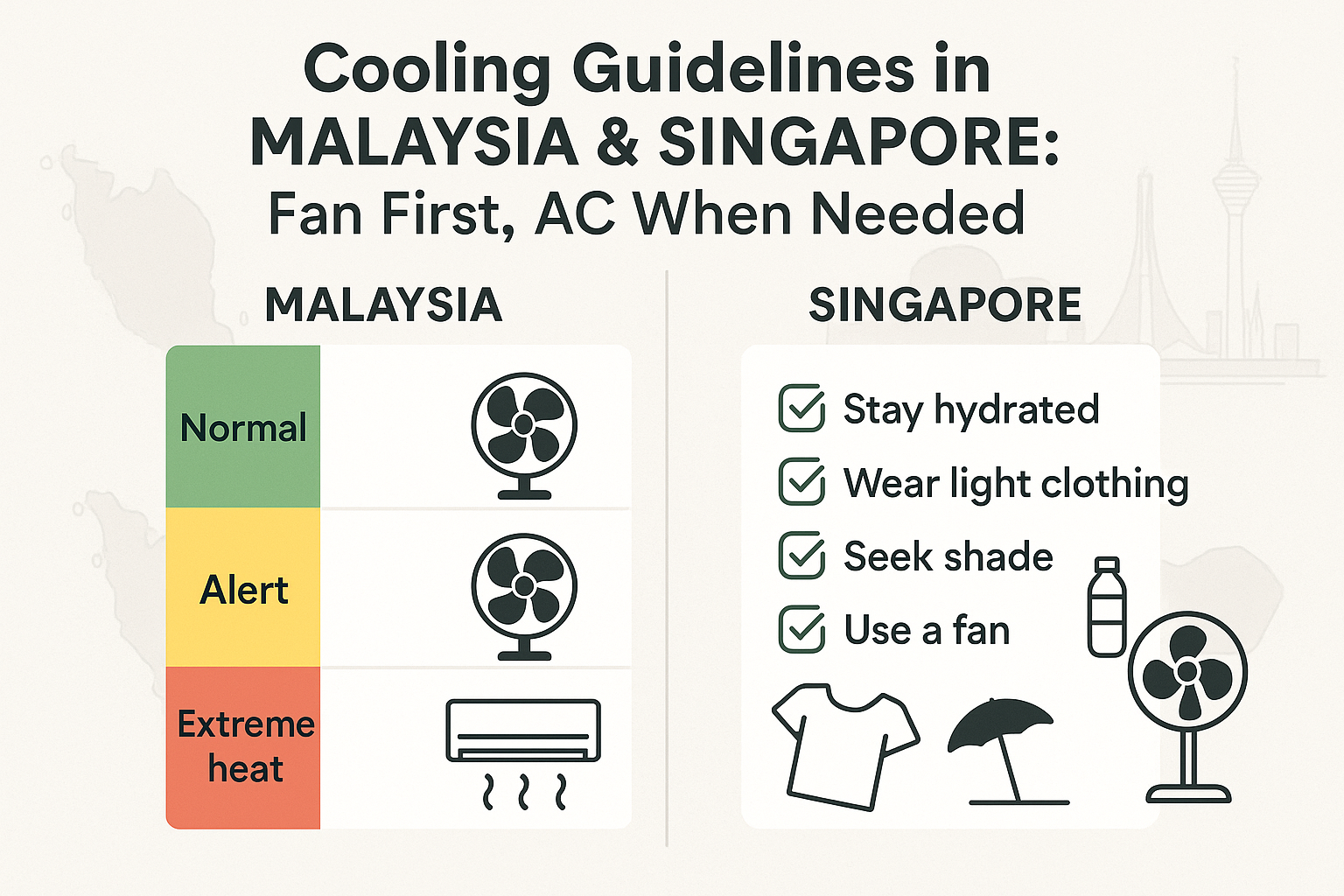
Malaysia uses a tiered heat alert system. During “Normal” and “Alert” levels (below 37°C), fans are recommended for staying cool. Only during extreme heatwaves (above 40°C) does air conditioning become essential.

Singapore doesn’t have a formal heat alert system, but the National Environment Agency and Energy Efficiency Programme Office have long advocated for sustainable cooling habits. One notable campaign encourages households and businesses to set air conditioners at 25°C or higher, promoting energy conservation while maintaining comfort. In such settings, pairing fans with higher AC setpoints significantly reduces energy usage without compromising how cool you feel.

Again, fans play a central role in this strategy, helping maintain airflow, reducing hot spots, and making elevated AC temperatures feel just as comfortable.

Let’s Rethink How We Stay Cool

Living in the tropics doesn’t mean we need to rely on air conditioning 24/7. By adopting a fan-first approach and saving air conditioning for when it’s truly needed, we can reduce our energy bills, lower our environmental impact, and still stay comfortable.

I believe it’s time we normalize fans as the primary cooling method, not as a backup. With smart placement, good air circulation, and an understanding of how our bodies respond to heat, fans can keep us cool and healthy well into the high twenties.

In a warming world, small choices like this matter more than ever. So the next time you reach for the remote, consider the fan first. It’s the cooler, smarter choice for Singapore, Malaysia, and beyond.

Elevate Everyday Comfort, The Smarter Way

True comfort isn’t just about temperature; it’s about how your space feels. A thoughtfully designed fan can transform your environment by improving air circulation, reducing stagnation, and making your daily routines feel lighter, fresher, and more breathable.

The JustZan 360º Air Circulator Fan does exactly that. Its wide-angle oscillation, quiet performance, and elegant build bring together form and function, perfect for those who value both practicality and style.

Start making smarter, more sustainable choices at home. Get yours today for RM299 / $98—available for a limited time only.

A minimalist bedroom with an air circulator fan on the bedside tableCategoriesAir Circulator Fan

How Minimalists are Embracing Air Circulators over Air Conditioners

Minimalism isn’t just about clean surfaces and fewer things—it’s about making intentional choices that reduce complexity and prioritize what matters. For many minimalists today, that intentionality extends even to how they cool their homes. Instead of defaulting to traditional air conditioners (AC), a growing number are turning to air circulators—a simpler, more efficient solution that better aligns with their values.

The Problem With AC (for Minimalists)

Air conditioner at the living room

Air conditioning offers powerful cooling but comes with significant drawbacks:

  • High energy use (500–5000+ watts),
  • Ongoing maintenance (filters, coils, refrigerants),
  • Environmental impact (HFCs and electricity demand),
  • Bulky footprint (especially split or central systems),
  • and substantial upfront and running costs.

For minimalists embracing low-maintenance living, that’s a lot of hassle for a device that might not even be necessary in many climates or smaller homes.

Why Air Circulators Are Gaining Ground

360 Air Circulator Fan on working desk over AC

Air circulators don’t lower the room’s temperature like AC units—but they enhance airflow, eliminating hot spots and making rooms feel cooler through continuous circulation. Their compact, plug-and-play design fits perfectly in small homes, studios, or dorms—especially where permanent AC installations are impractical.

Key minimalist-friendly features include:

  • Low energy usage (as little as 40W),
  • No refrigerants or professional servicing,
  • Minimal upkeep (just occasional dusting),
  • and affordable price tags ($80-$150 on average).

They also fit well in flexible spaces, allowing users to move them from room to room or store them away when not needed.

Minimalist Values in Action

Air circulators embody the very values that define minimalist living:

  • Intentionality: Choosing “good enough” comfort without overconsuming.
  • Simplicity: No installation, no filters, no complex controls.
  • Frugality: Lower purchase and operating costs free up money for priorities.
  • Sustainability: Reduced energy demand and no harmful refrigerants.
  • Function over excess: They do what’s needed—and no more.

Comparing Cooling Systems Through a Minimalist Lens

Let’s break down the differences between air circulators and AC units in the areas that matter most to minimalists:

Feature Air Circulator Air Conditioner
Setup Plug-and-play Installation required
Energy Use ~ 40 to 100W ~ 500 to 5000W+
Running Cost Cents per day $30–$300+ monthly
Maintenance Occasional dusting Filter changes, servicing
Environmental Impact No refrigerants, low footprint High energy use, HFCs
Footprint Compact, portable Bulky, semi-permanent

While air conditioners are often needed during especially warm or humid days, many minimalists find that air circulator fans strike the right balance—delivering everyday comfort without the high energy costs or maintenance.

They also work well alongside AC units, helping to circulate cool air more efficiently. This lets you raise the thermostat slightly, reduce power bills, and still stay comfortable throughout the day.

Real-World Minimalism

Online forums and product reviews reveal a recurring theme: minimalists love the balance air circulators strike. Users praise their portability, quiet operation, and surprising effectiveness, especially in smaller rooms.

Many adopt hybrid cooling strategies: using circulators most of the time, and relying on AC only when absolutely necessary—further minimizing environmental and financial impact.

Rethinking Comfort

In the end, the rise of the air circulator is about more than airflow—it’s a sign that people are rethinking comfort through the lens of sustainability, simplicity, and intentionality.

Minimalists aren’t rejecting cool air. They’re embracing smarter ways to get it.

So if you’re looking to live with less, spend less, and stress less—without sacrificing your sanity in the heat—an air circulator might just be the breath of fresh air your home needs.

Looking for the Perfect Air Circulator?

Air circulators ont the bedside table with AC

If you’re ready to simplify your space and stay cool the minimalist way, check out the JustZan 360° Air Circulator Fan.

Pre-order now for $98 and save $50, but only until the end of the month.

It’s quiet, energy-efficient, and designed to move air all around the room—perfect for small spaces or anyone looking to cut back on AC use.